

Makkah Ziyarat by Bus: Explore the Historic and Sacred Places of Makkah
Makkah is one of the most special places in the world for Muslims. Every year, millions of Muslims visit this blessed city to perform Umrah and Hajj, offer prayers, and experience the spiritual atmosphere of the holy land. But there’s much more to discover beyond Masjid al-Haram. The city and its surrounding areas are home to many historic Islamic locations connected with the life of Prophet Muhammad (peace be upon him), the early Muslim community, and important events in Islamic history.
For many visitors, exploring these locations is an unforgettable part of their pilgrimage. A well-organized Makkah ziyarat by Bus journey gives pilgrims an opportunity to visit several important places together without having to arrange separate transportation for every stop.
Whether you’re visiting Makkah for the first time or returning for another Umrah, visiting its historic landmarks can help you understand the events and sacrifices that shaped Islamic history. From the mountains associated with important moments in the life of the Prophet (PBUH) to the plains connected with Hajj, every location has its own story.
A bus journey also makes group travel easier, especially for families, elderly pilgrims, and people traveling with friends or relatives. With proper planning, you can explore important landmarks, listen to their historical background, and enjoy a meaningful experience during your stay in the holy city.
Let’s explore the most important places, the benefits of a bus journey, and everything you should know before planning your visit.
What Is Makkah Ziyarat?
Ziyarat means visiting a place, particularly a location that holds religious, historical, or spiritual importance. In Makkah, the term usually refers to visiting important Islamic landmarks connected with the history of Islam and the Hajj pilgrimage.

These visits are different from performing Umrah or Hajj. They are an opportunity to learn about Islamic history, remember significant events, and reflect on the lives of the Prophets and early Muslims.
Some locations are directly connected with events from the life of Prophet Muhammad (PBUH), while others are associated with the history of Hajj and the early Muslim community.
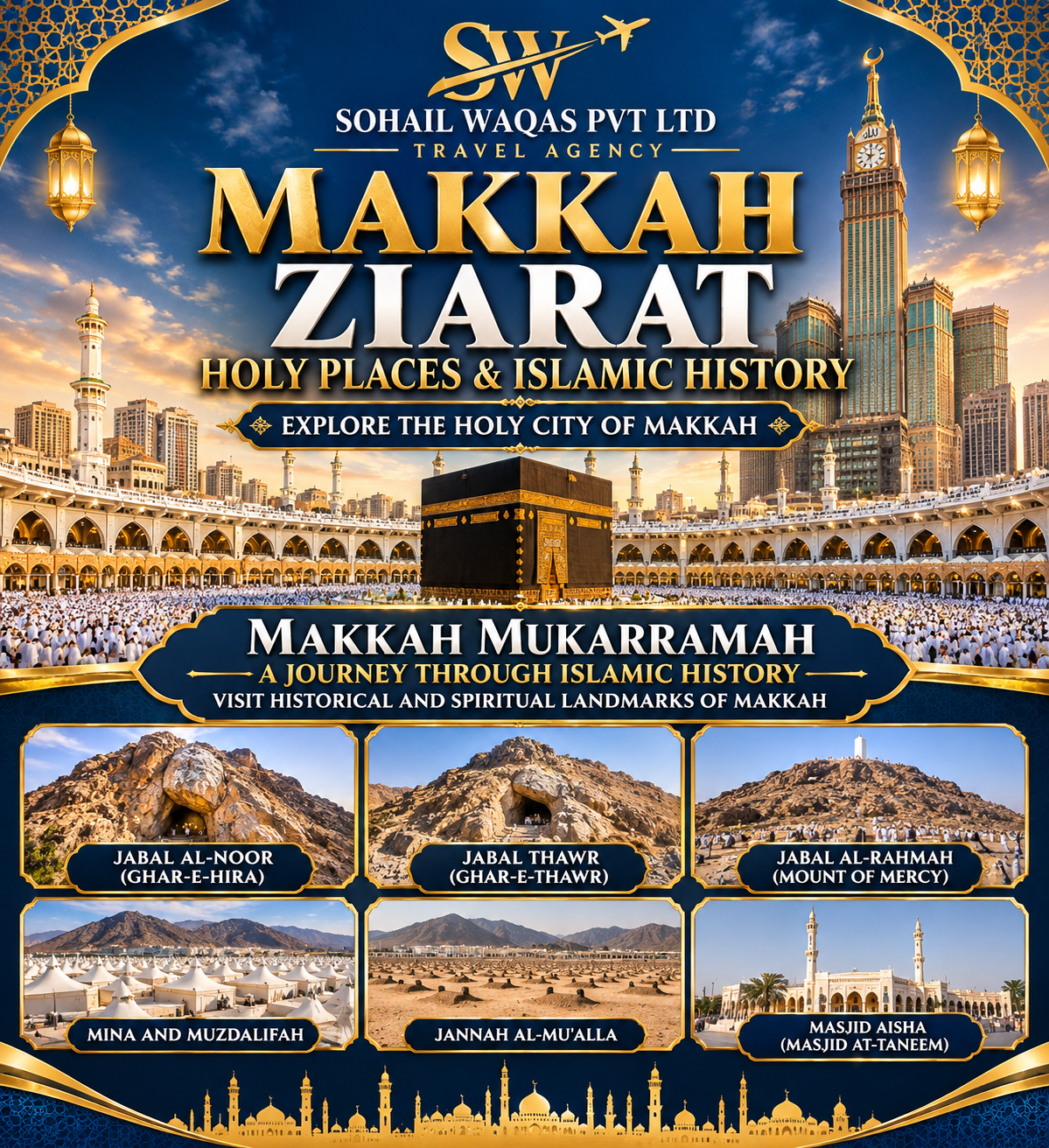
Common locations included in a Makkah ziyarat tour are:
-
Jabal al-Noor and the Cave of Hira.
-
Jabal Thawr and the Cave of Thawr.
-
Mina.
-
Arafat.
-
Jabal al-Rahmah.
-
Muzdalifah.
-
Jannat al-Mu’alla.
-
Hudaybiyah.
-
Masjid Aisha (Masjid al-Taneem).
The exact places included depend on the tour arrangement, road access, traffic conditions, and available time.
Why Choose Makkah Ziyarat by Bus?
Exploring Makkah’s historic locations can be challenging if you don’t know the roads, distances, or local transportation arrangements. A bus tour can make the experience more organized and convenient.
Instead of arranging transportation for each location, visitors can travel together and follow a planned route.
Here are some reasons why many pilgrims prefer this option.
1. Visit Multiple Historical Places
Makkah has several important Islamic landmarks spread across different areas. Visiting them individually can take considerable planning.
A bus journey helps you explore multiple locations during one organized trip. You can see important landmarks, learn about their history, and make better use of your available time.
2. Convenient for Families and Groups
Traveling with family members can be difficult when everyone needs separate transportation.
A bus provides a shared travel arrangement. Family members, friends, and fellow pilgrims can stay together throughout the journey.
This can be especially helpful for:
-
Families traveling with children.
-
Groups of Umrah pilgrims.
-
Elderly visitors.
-
People traveling with relatives.
-
Visitors who prefer organized group transportation.
3. Less Transportation Planning
When you arrange every journey independently, you may need to manage different drivers, routes, and pickup locations.
An organized tour reduces much of this planning. You can focus more on the historical and spiritual importance of the places you’re visiting.
4. A Better Understanding of Islamic History
Seeing a historical location can make its story easier to understand.
For example, learning about the migration of Prophet Muhammad (PBUH) while visiting the area associated with the Cave of Thawr can help you connect historical events with real locations.
Similarly, visiting the plains of Arafat gives you an opportunity to understand the importance of this place during Hajj.
5. A Shared and Memorable Experience
A bus journey allows pilgrims to share their experiences with others. You can travel with fellow Muslims, exchange knowledge, and learn from people who may have visited these locations before.
For many visitors, these shared moments become lasting memories of their time in Makkah.
Top Places to Visit During Makkah Ziyarat
Makkah is surrounded by mountains, valleys, and historic locations that hold an important place in Islamic history. Below are some of the most well-known places pilgrims may explore during their visit.
1. Jabal al-Noor – The Mountain of Light
Jabal al-Noor is one of the most famous mountains in Makkah. It is especially important because it contains the Cave of Hira, where Prophet Muhammad (PBUH) received the first revelation of the Holy Quran.
This event marked the beginning of his prophethood and a turning point in human history.
The mountain has a special place in the hearts of Muslims because of its connection with the beginning of the final divine message.
Visitors can view the mountain during a bus tour and learn about its historical significance.
An important travel detail: The bus can take visitors to an accessible area near the mountain, but reaching the Cave of Hira requires a separate uphill hike. It is not directly accessible by bus.
The climb can be physically demanding, so visitors should consider their health, fitness, age, and available time before attempting it.
2. Cave of Hira
The Cave of Hira is located on Jabal al-Noor. It is the place where Prophet Muhammad (PBUH) received the first revelation through Angel Jibreel (AS).
This is one of the most significant events in Islamic history.
The first revealed verses were from Surah Al-Alaq. They began with the command to read, highlighting the importance of knowledge and learning in Islam.
Many pilgrims feel a deep connection when they see the mountain associated with this event.
However, the cave itself is reached by climbing the mountain. Visitors who cannot manage the hike can still learn about its significance and view the mountain from accessible areas.
3. Jabal Thawr – The Mountain of the Cave
Jabal Thawr is another important mountain in Makkah. It is associated with the migration of Prophet Muhammad (PBUH) from Makkah to Madinah.
According to Islamic history, Prophet Muhammad (PBUH) and Hazrat Abu Bakr (RA) stayed in the Cave of Thawr during their migration.
They remained there while their pursuers searched for them. The event is remembered as an example of trust in Allah, patience, and divine protection.
The mountain is located south of Makkah and is a well-known historical landmark.
Visitors can view the mountain during a bus journey. Reaching the cave requires a steep and physically demanding climb, so it should not be treated as an ordinary bus stop.
4. Mina – The City of Tents
Mina is one of the most important locations associated with Hajj. It is situated in the eastern part of Makkah and is famous for its large collection of air-conditioned tents.
During Hajj, millions of pilgrims stay in Mina as part of the pilgrimage rituals.
The area is associated with important Hajj activities, including the stoning of the Jamarat.
For visitors exploring Makkah outside the Hajj season, Mina provides an opportunity to understand the arrangements and facilities used to accommodate pilgrims.
A visit to Mina can help you appreciate the scale of Hajj and the organization required to serve such a large number of people.
5. Arafat – The Most Important Day of Hajj
The plain of Arafat is one of the most significant places in the Hajj pilgrimage.
On the ninth day of Dhul Hijjah, pilgrims gather at Arafat for Wuquf, the central standing ritual of Hajj.
It is a day of prayer, repentance, remembrance, and asking Allah for forgiveness.
The Prophet Muhammad (PBUH) delivered his famous Farewell Sermon during his final Hajj in this region.
Muslims around the world remember Arafat because of its importance in the completion of Hajj.
Visiting this area outside the pilgrimage season can help visitors understand the geography and significance of the Hajj rituals.
6. Jabal al-Rahmah – The Mountain of Mercy
Jabal al-Rahmah is a well-known landmark located in the plain of Arafat.
Its name is commonly translated as the Mountain of Mercy. Many pilgrims visit this location during Hajj and during historical sightseeing journeys.
The mountain is widely recognized because of its association with Arafat.
Visitors often stop to view the surrounding area and learn about its importance in the Hajj pilgrimage.
It’s worth remembering that visiting or climbing Jabal al-Rahmah is not a required part of Hajj, nor is there a special religious ritual that must be performed there.
The most important act of Hajj at Arafat is Wuquf, not climbing the mountain.
7. Muzdalifah – A Significant Hajj Location
Muzdalifah is situated between Arafat and Mina. It is another important location connected with the Hajj pilgrimage.
During Hajj, pilgrims travel from Arafat to Muzdalifah after sunset on the ninth day of Dhul Hijjah.
They spend the night there, offer prayers, and collect pebbles for the stoning ritual in Mina.
The area represents an important stage of the Hajj journey.
During a sightseeing trip, visitors can learn how Muzdalifah connects the different locations involved in Hajj.
8. Jannat al-Mu’alla – The Historic Cemetery
Jannat al-Mu’alla is a historic Muslim cemetery in Makkah.
It is associated with several important figures from early Islamic history, including members of the family of Prophet Muhammad (PBUH).
The cemetery is a place of reflection and remembrance. It reminds visitors of the early Muslim community and the people who lived through the beginning of Islam.
Visitors should maintain respect and follow the rules of the authorities when viewing the cemetery.
Access arrangements may vary, so it is best to check locally before planning a stop.
9. Hudaybiyah – A Historic Place of Peace
Hudaybiyah is an important location connected with the Treaty of Hudaybiyah.
In the sixth year after Hijrah, Prophet Muhammad (PBUH) and his companions traveled toward Makkah with the intention of performing Umrah.
They were prevented from entering the city, and an agreement was eventually made between the Muslims and the Quraysh.
The treaty became a major event in Islamic history and opened the way for important developments in the spread of Islam.
Visiting the Hudaybiyah area provides an opportunity to learn about patience, diplomacy, and the wisdom behind the decisions made by the Prophet (PBUH).
10. Masjid Aisha – Masjid al-Taneem
Masjid Aisha, also known as Masjid al-Taneem, is located outside the Haram boundary in the direction of Madinah.
It is an important location for pilgrims who wish to enter Ihram for Umrah.
Many visitors travel to this mosque when they plan to perform another Umrah during their stay in Makkah.
The mosque is associated with an incident involving Hazrat Aisha (RA), who entered Ihram from Taneem for Umrah after guidance from Prophet Muhammad (PBUH).
The mosque is an important stop for many Umrah visitors, although the need to visit it depends on each pilgrim’s circumstances and religious guidance.
https://www.haramainrenter.com/makkah-ziyarat-by-bus-explore-historic-islamic-sites/
4. Frequently Asked Questions (FAQs)
1. What places are included in Makkah Ziyarat by Bus?
A typical sightseeing journey may include Jabal al-Noor, Jabal Thawr, Mina, Arafat, Jabal al-Rahmah, Muzdalifah, Jannat al-Mu’alla, and other historical landmarks. The exact itinerary depends on the tour arrangement and local access conditions.
2. How long does a Makkah Ziyarat tour take?
The duration depends on the number of locations included, traffic conditions, sightseeing stops, and the route. It’s best to confirm the expected departure and return times before joining the tour.
3. Can elderly people join a Makkah Ziyarat bus tour?
Yes, elderly visitors can generally join a bus sightseeing journey. However, some locations require walking or climbing. Families should confirm accessibility arrangements and choose an itinerary suitable for their relatives.
4. Can visitors climb Jabal al-Noor and Jabal Thawr during the tour?
Visitors may be able to climb these mountains if access is permitted and they are physically fit. However, the climbs are demanding, and the bus cannot take visitors directly to the caves. Visitors should consider their health and weather conditions before attempting them.
5. Is visiting Arafat and Mina part of Hajj?
Arafat and Mina are important locations in the Hajj pilgrimage. However, visiting these places during a sightseeing journey outside Hajj does not mean that a person has performed any Hajj ritual.
6. Why should I choose Makkah Ziyarat by Bus?
A bus journey offers an organized way to explore multiple historical landmarks. It can be particularly convenient for families, groups, and pilgrims who prefer shared transportation instead of arranging separate journeys to different locations.
5. Contact Details – Book Your Makkah Ziyarat Journey
Make your visit to the historic landmarks of Makkah a memorable part of your Umrah journey.
For information about Makkah ziyarat by Bus, tour arrangements, pickup details, available sightseeing locations, and group travel, contact the following representatives.
M. Waqas Siddique
Contact Number: +92 303 5655552
M. Sohail Siddique
Contact Number: +92 334 2777123
Get in touch to discuss your sightseeing requirements and plan a convenient journey with your family, friends, or fellow pilgrims.
Explore the historic places of Makkah, learn about the remarkable events of Islamic history, and make your time in the holy city even more meaningful.

